
Automate inspection. Perfect quality. Optimize throughput.
Three outcomes from one custom-vision capability, trained on your product and your line — not a generic detector built on internet photographs. Below: how automated inspection, defect detection and throughput analytics work, and how we put the cameras behind them in place.
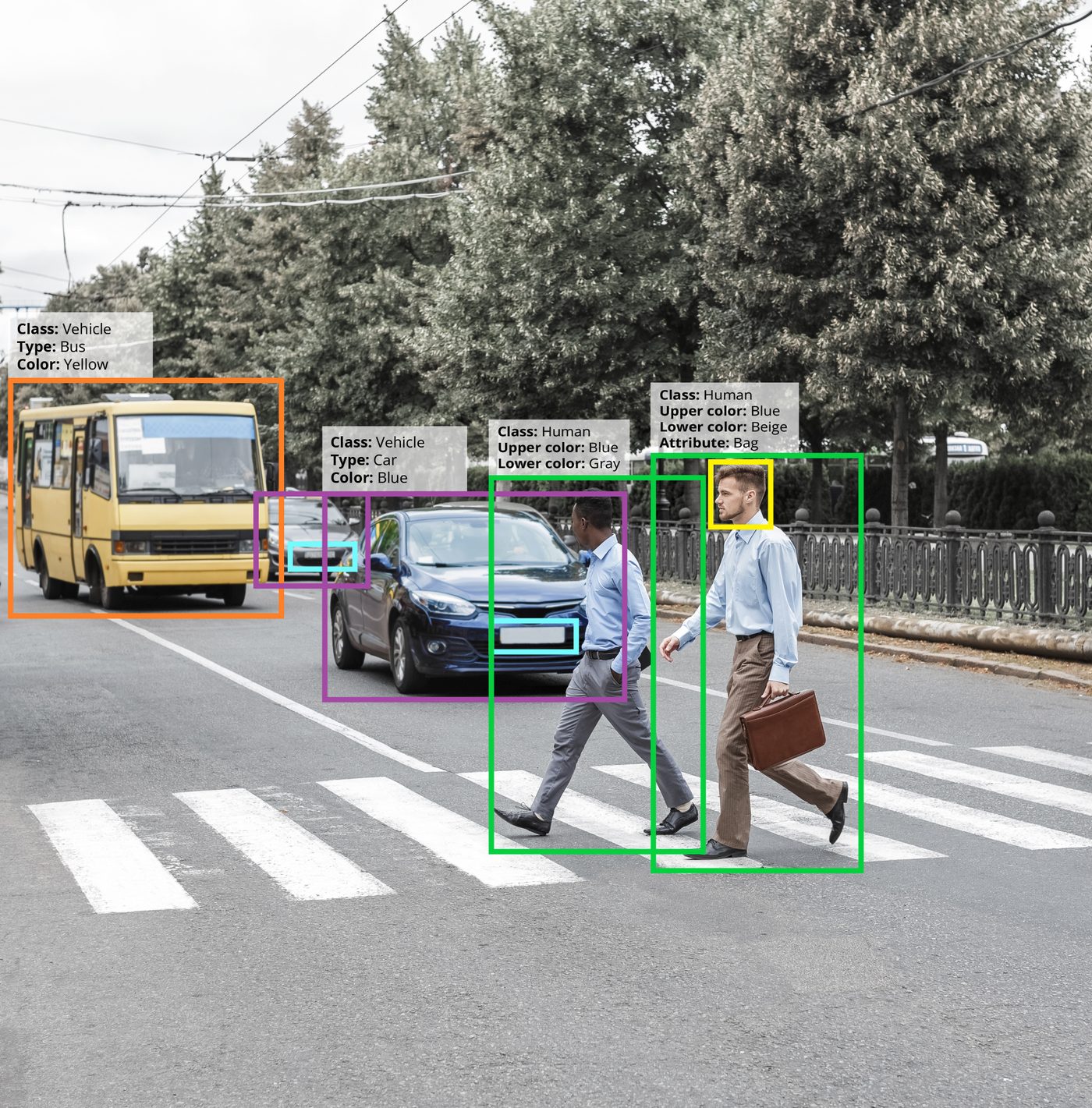
Every unit checked — not a sample.
A camera watches the line around the clock. We put automated optical inspection where a person can only spot-check: 100% of units examined as they pass, every shift, with an alert the moment something's off and an image kept for every one.
- 100% in-line inspection, not sampling
- Runs 24/7, unattended and consistent
- Real-time pass/fail with instant alerting
- Image evidence retained for every unit
- Reject-diversion signals to existing PLC / line control
- Surface defects: scratches, cracks, discoloration
- Shape and dimensional errors
- Size and grade classification and sorting
- Foreign-object and contamination detection
- Assembly, component and label / print verification
Catch what the eye misses. Grade what the hand can't keep up with.
We train the model on examples of your good and bad units, so it learns your definition of a defect — not a generic one — and applies it identically to every piece. The same model can grade and sort automatically, replacing subjective, slow, hand-graded QC with one consistent standard.
More throughput, less waste, more margin.
The detection stream that inspects your product also measures your business. Count and yield, cycle time, where the line stalls, which SKUs and shifts actually make money — surfaced as data you can act on, so you find the throughput, the yield, and the revenue you're currently leaving on the floor, and the cost you can take out of it.
- Count, yield and throughput analytics
- Bottleneck, stoppage and downtime detection
- Revenue generators and margin drivers by product and shift
- Shift-over-shift and line-over-line comparison
- Reject-rate and scrap reduction — direct cost savings
Analytics are only as good as the camera in front of them.
Most failed vision projects fail physically, not mathematically: wrong lens, wrong mounting height, insufficient light, a network that can't carry the streams. As an Axis Technology Partner we handle the physical layer as part of the engagement rather than assuming it away.
- Site survey, sight-line planning and camera selection
- Lens, lighting, IP-rating and PoE budget specification
- Axis ACAP on-camera analytics where edge processing wins
- VMS, NVR and ONVIF integration with existing estate
- Security design: LPR, perimeter, access and threat detection
Assess
What are you trying to know, and can a camera actually see it? We'll tell you when the answer is no.
Pilot
One line, one site, real conditions. A working capture loop and a measurable accuracy figure before anyone commits to a rollout.
Deploy
Hardware specified and integrated, models tuned on site data, dashboards and exports wired into your systems.
Maintain
Drift monitoring, retraining on new conditions, and support from the person who built it.
Live camera streaming with data overlays
Alongside the analytics work we build public-facing livestreams using CamStreamer and Flightradar24 — aviation cameras that overlay live flight data onto the video feed. The same overlay and streaming stack works for site cams, visitor-facing feeds, and operations displays.
When the feed itself is the product.
Real-time data burned onto a live stream, running unattended on Axis hardware. It's a smaller line of work than the traceability practice, but it's the same core skill: getting a camera, a data source and a piece of software to cooperate reliably for months at a time.
Have a problem a camera might solve?
Describe it in a paragraph. We'll tell you whether it's a vision problem, a process problem, or both.