
You're inspecting a sample, not the run
Spot-checks miss whatever happens between them. Automated vision inspects 100% of units as they pass — nothing leaves the line unseen.
Custom machine vision that inspects every unit, catches every defect, and optimizes your throughput — models trained on your product and your line, not a generic detector that half-works on real footage.
Book a consultationOne team builds the model and the system behind it — 100% in-line inspection, defect detection and yield analytics that run every shift, with FSMA 204 traceability captured in the same pass.
A person can spot-check a sample, not the whole run — and between checks, defects slip through. Standards drift from shift to shift, and by the time a flaw is caught downstream — or by a customer — it's already expensive to fix. There's rarely an image trail to prove what shipped. Automated vision changes the economics: every unit, one standard, and the data to see where you're losing money.
Spot-checks miss whatever happens between them. Automated vision inspects 100% of units as they pass — nothing leaves the line unseen.
Subjectivity and shift-to-shift variance mean the same defect gets judged differently from one check to the next. A model applies one standard to every unit, every time — so quality is consistent and defensible.
A flaw found at shipping — or by your customer — costs far more than one caught in-line. Catching it at the source is where the money is, and where cameras earn their keep.
One custom-vision capability — trained on your product — pointed at the three things that move your numbers: automation, quality, and the throughput, revenue and cost that add up to profit.
Put a camera on the work around the clock. Every unit checked, every shift, with no added headcount and an image kept for every event.
Catch the flaws people miss and apply one consistent standard to every unit — then grade and sort automatically instead of by hand.
The same camera feed becomes business insight — where the line slows, where yield and margin leak, which changes actually grow revenue, and where the money is quietly walking out the door.
We're a young practice, so these aren't past results — they're the standard a well-scoped inspection system is built to hold.
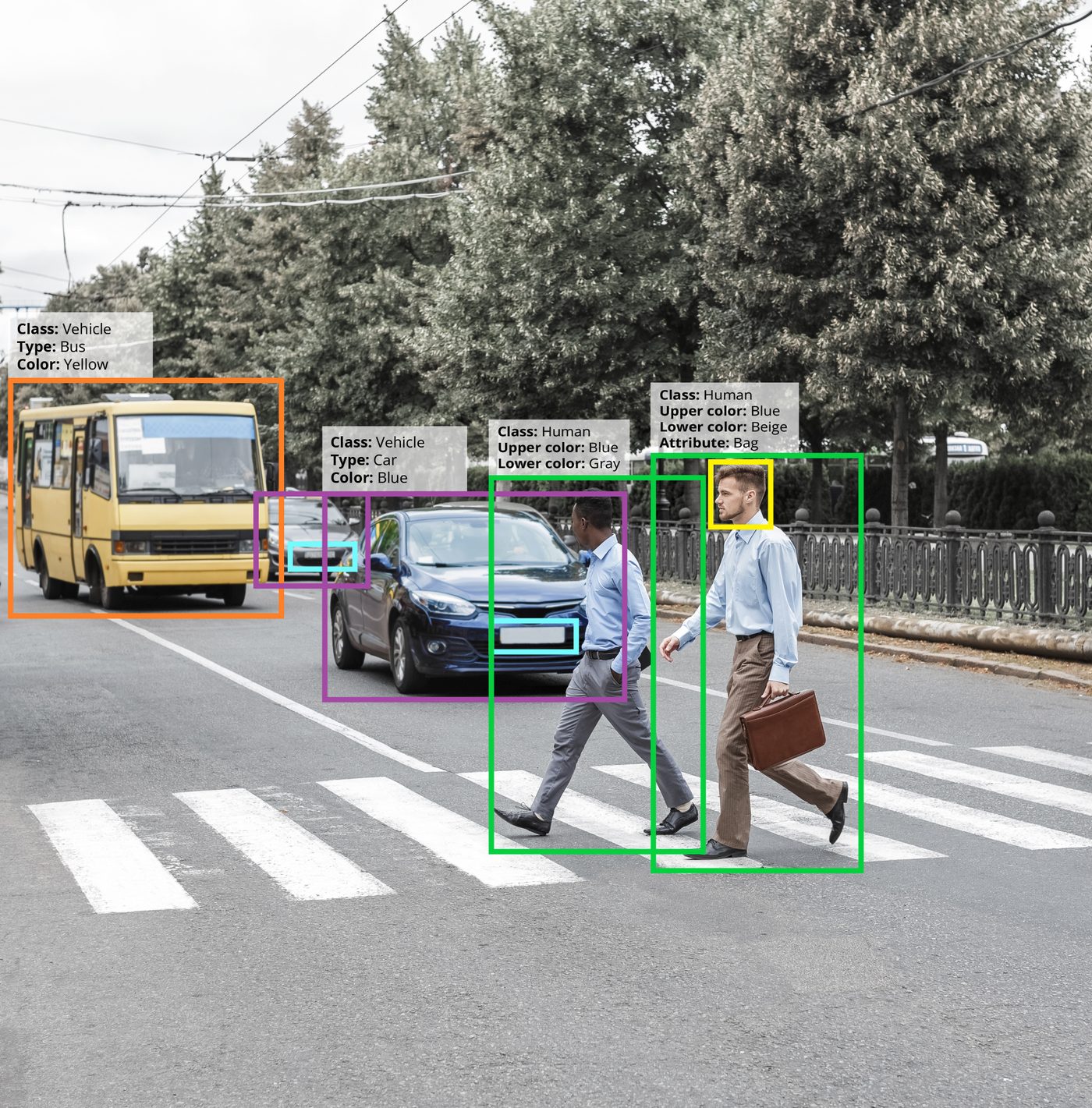
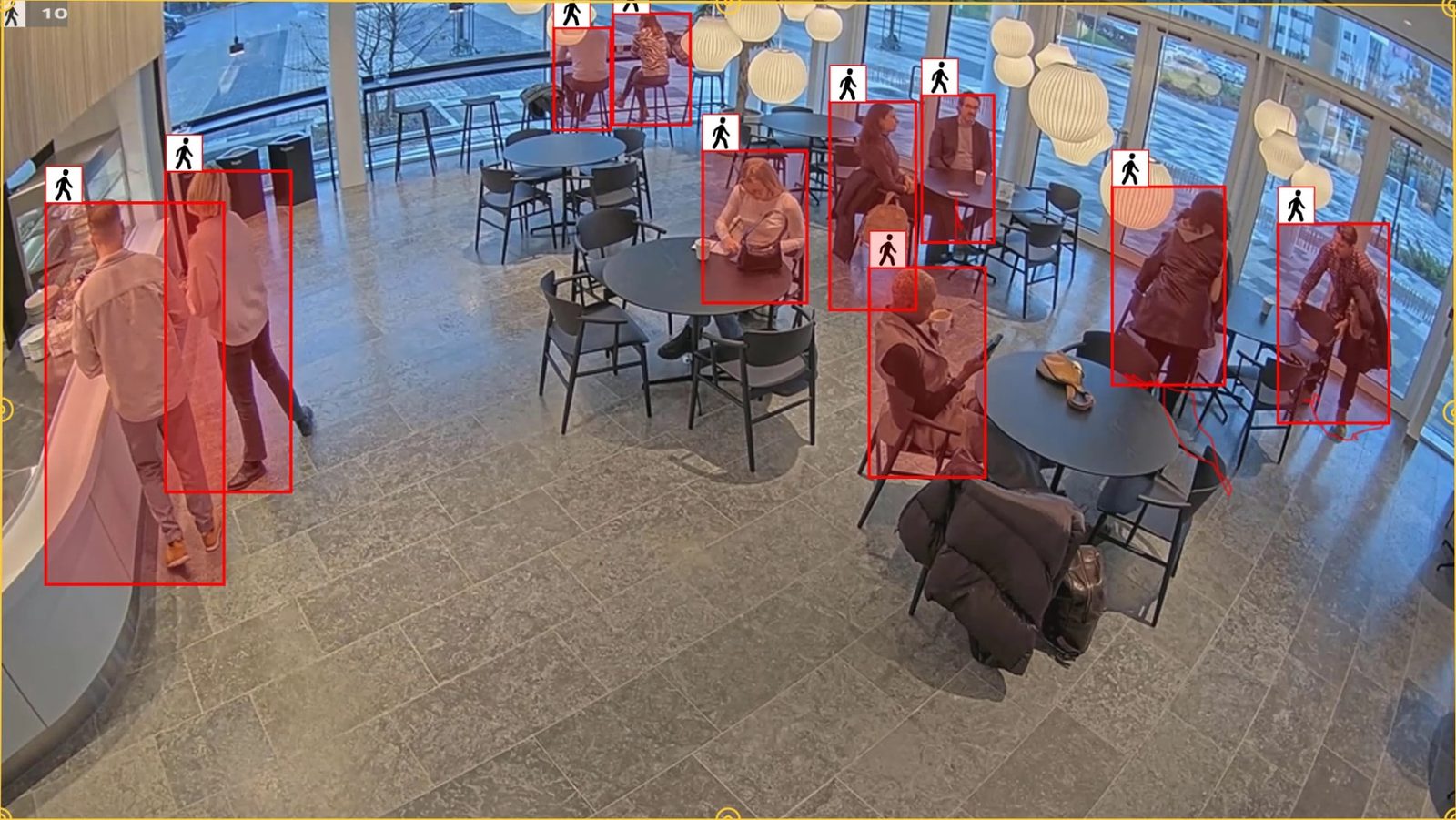
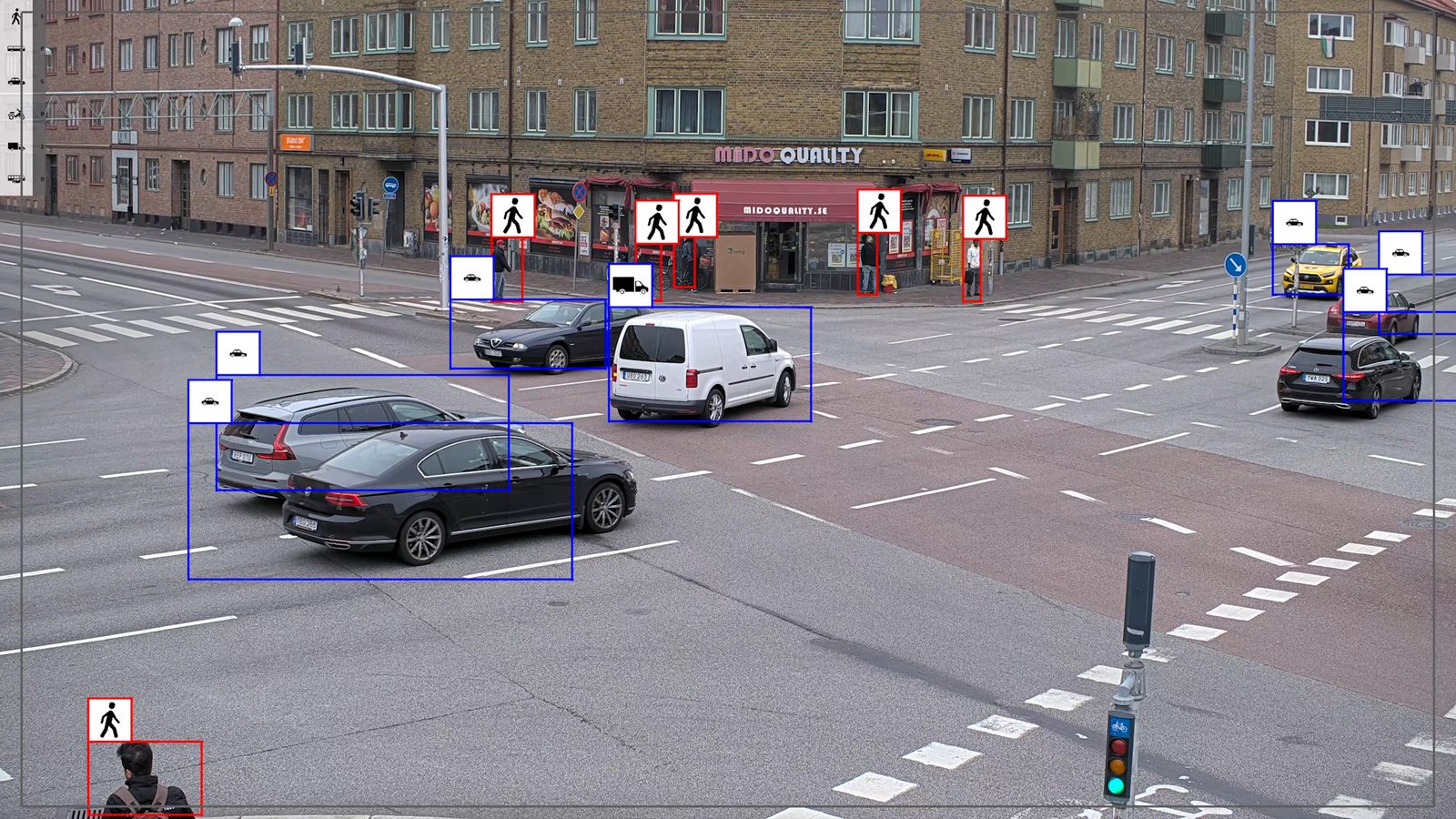
Real object detection: people, vehicles, attributes and events, classified frame by frame. These illustrate the capability — we train models like them on your product, your line and your cameras.
The same detect-track-and-record pipeline behind every custom build, shown here on our flagship use case. No new hardware for the crew to carry, no app to remember — the camera watches the work, the model recognizes the event, and the register fills itself in.
Cameras cover the points where lots change state — receiving, grading, transformation, shipping.
Models trained on your product identify the crate, the label, the scale reading, the operator, the movement.
Each detection becomes a structured event with a Traceability Lot Code, timestamp, location and quantity — validated on the way in.
When a request arrives, the register produces an FDA-ready Electronic Sortable Spreadsheet in one action.
We're early. Rather than dress that up, here's exactly what exists today — you can look at all of it before you talk to us.
A working reference implementation of passive traceability, built end to end for a stone crab aquaculture operation: operations feed, environmental monitoring with threshold alerts, harvest history, an FSMA 204 lot register with one-click FDA export, a GDST/EPCIS event stream, and a five-layer data-quality system that catches bad records before they enter the register.
Public-facing camera streams built on CamStreamer and Flightradar24, burning live flight data onto the video feed and running unattended for months at a time on Axis hardware.
Tangent Solutions is a young practice. We hold Axis Technology Partner status, we've built and can demonstrate a full FSMA 204 traceability platform, and we run live camera systems in production — but we have not yet delivered a paid traceability deployment, and we'd rather you heard that from us than found it out later. What that buys you: our full attention, pilot-first pricing, and a founding-customer relationship with the person who writes the code.
Automated size and grade classification, shell and surface defect detection, harvest-readiness assessment on the conveyor or in the field.
Biomass and growth tracking, feed-waste reduction, water-condition thresholds and real-time alerting on surface and underwater feeds.
Public-facing livestreams built with CamStreamer and Flightradar24 — aviation and site cameras with real-time data overlays.
One custom-vision capability — detection, tracking and structured event data — applied anywhere something moves through a process. Food traceability is where the regulation bites hardest, but it's one column of many.
In-line quality control and automated optical inspection, defect and assembly verification, throughput analytics and production-line automation.
Drive-thru speed of service, order-accuracy checks, food-safety and hygiene compliance, and lobby queue analytics — on the cameras you already run.
Shellfish and finfish grading and sorting, defect detection, harvest logging, feed tracking and FSMA 204 lot registers.
Grading and defect sorting, harvest-ready detection, yield forecasting, early disease and pest identification.
Inventory and pallet tracking, dock-door event capture, cold-chain hand-offs and safety compliance.
Shelf and stock analytics, footfall and dwell measurement, loss prevention and queue monitoring.
Models trained on your data and your conditions. No repackaged generic detector that half-works on your product.
Axis Technology Partner. We speak lens choice, lux, mounting, PoE budget and network load — not just Python.
FSMA 204 Key Data Elements, GDST and EPCIS event structures designed in from the start, not bolted on later.
A small practice by choice. The person who scoped your system is the person who writes it and answers the phone.
A person spot-checks a sample and judges it by eye, so results vary by inspector and by shift. An automated system inspects 100% of units against one fixed standard, flags defects in real time, and keeps an image of every unit — so nothing ships unseen and you have evidence of what passed.
It depends on what a camera can see, but commonly: surface defects (scratches, cracks, discoloration), shape and dimensional errors, missing or misplaced components, label and print errors, foreign objects and contamination, and grade or size banding. We train the model on examples of your good and bad units, so it learns your definition of a defect — not a generic one.
Passive traceability means the record is created by observing work that is already happening — cameras and sensors log the event automatically — rather than by asking a worker to stop and type it in. The compliance record becomes a by-product of the operation instead of an extra task.
Usually not. We're an Axis Technology Partner and work with most ONVIF-compliant IP cameras. Where existing coverage is adequate we build on it; where it isn't, we specify only the additional views the traceability model actually requires.
No software makes you compliant on its own — compliance is a programme covering your records, your procedures and your traceability plan. What our systems do is capture and structure the Key Data Elements so that producing an FDA Electronic Sortable Spreadsheet within 24 hours is a single export rather than a week of searching.
A scoped pilot on one line or one site typically runs four to eight weeks from site survey to a working capture-and-export loop. Full rollout depends on site count and network readiness.
Yes. The same detection-and-event architecture runs in manufacturing QC, warehouse and dock operations, retail analytics, and healthcare monitoring. Food traceability is where the regulatory pressure is sharpest, which is why it leads — but it isn't the limit of the work.
Tell us where quality escapes or the line slows down. We'll tell you honestly whether cameras can fix it — and what it would take.